Business License

Brass vs Copper Electrode Wire for Wire Cutting Machine Work
Most shops buy brass wire because it was the wire in the machine when it arrived, and they keep buying it because the price looks lower on the invoice. That reasoning holds for a large share of general work and quietly costs money on a smaller share.
Choosing between a wire cutting machine brass electrode and a wire cutting machine copper electrode is a decision about conductivity, tensile behaviour and kerf, and it interacts with wire cutting machine wire thickness more than most buyers realise. This article separates the three.
1. Why Wire Cutting Machine Brass Electrode Choice Still Matters
Brass is an alloy of copper and zinc, and the zinc content does two things at once. It raises tensile strength, which helps the wire survive tension and flushing pressure, and it lowers conductivity relative to pure copper.
For a shop cutting general steel in the 20 to 80 mm range, that trade is favourable. The wire runs under tension, breaks predictably when overloaded, and costs less per kilogram than a copper equivalent.
A wire cutting machine brass electrode also machines consistently from spool to spool, because the alloy is tightly specified by most suppliers. That consistency is worth more than a marginal conductivity advantage when a shop runs the same program every week.
Zinc content also decides how the wire fails. A higher zinc alloy breaks with less elongation, which protects the kerf at the cost of a slightly harder cut. That is a reasonable trade for a shop whose operators are not watching the gap voltage every minute of the shift.
Suzhou Excellence Intelligent Technology Co Ltd stocks brass as the default recommendation for general work and keeps copper grades for the cases described below, rather than treating one as an upgrade of the other.
2. Wire Cutting Machine Copper Electrode and Conductivity
Copper conducts better than brass, which shows up as a lower gap voltage for the same current and a more stable discharge at low energy settings. On fine work, that stability matters.
A wire cutting machine copper electrode also erodes less at very low discharge energies, where the arc is short and the wire faces repeated thermal cycling. The improvement is small per pass and visible across a batch.
The cost is tensile strength. Pure copper is softer and stretches more under tension, so a shop running high flush pressure on a deep cut may see the wire elongate and the kerf widen rather than break cleanly.
A wire cutting machine copper electrode also reacts differently to a clogged filter. Where brass tends to break, copper tends to run hot and lose diameter, which shows as a gradual size drift rather than a stoppage. Shops that monitor size every tenth part catch it; shops that monitor nothing discover it at inspection.
| Property | Brass | Copper |
|---|---|---|
| Conductivity | moderate | high |
| Tensile strength | high | lower |
| Cost per kilogram | lower | higher |
| Behaviour at low energy | stable | more stable |
| Break mode | clean | stretch then break |
3. Wire Cutting Machine Wire Thickness and Kerf
Wire cutting machine wire thickness determines the kerf more directly than the alloy does. A 0.25 mm wire produces a kerf near 0.28 mm, while a 0.15 mm wire produces about 0.18 mm once the spark gap is included.
That difference matters twice. A narrower kerf wastes less material on expensive stock, and it reaches smaller internal radii, since the minimum radius is roughly half the wire diameter plus the gap.
Thickness also changes the load on the machine. A thin wire breaks more readily and needs lower flush pressure, which in turn makes deep cuts slower and less stable.
| Wire thickness | Typical kerf | Minimum internal radius |
|---|---|---|
| 0.10 mm | 0.13 mm | 0.07 mm |
| 0.15 mm | 0.18 mm | 0.10 mm |
| 0.20 mm | 0.23 mm | 0.13 mm |
| 0.25 mm | 0.28 mm | 0.16 mm |
Read the third column before accepting a job with a tight corner. A drawing calling for a 0.1 mm internal radius is describing a 0.15 mm wire, and quoting it against a machine loaded with 0.25 mm is quoting work the machine cannot finish.
4. Brass Against a Wire Cutting Machine Copper Electrode on Wear
Wire consumption is usually expressed as metres per hour, but the figure that matters is metres per good part. A wire that breaks twice a shift costs more than one that runs clean at a higher price.
Brass tends to break cleanly at a predictable load, which lets an operator set tension close to the limit without risk of a stretched section. Copper stretches before it parts, and a stretched section cuts an oversized kerf for the remainder of the spool.
The practical difference shows in the scrap bin. A shop running a wire cutting machine brass electrode replaces a spool and continues, while one running a wire cutting machine copper electrode may finish a batch with a wire that has silently thinned, and the last few parts carry the evidence.
Excellence Intelligent Technology advises shops to judge wire by metres per finished part rather than by price per spool, because the second figure rewards the wrong choice on difficult work.
5. Wire Cutting Machine Wire Thickness for Fine Work
Below about 0.15 mm the wire behaves differently. Tension has to come down, flush pressure has to come down, and the cut rate falls sharply because each discharge removes less material.
A shop moving to 0.1 mm wire for a fine job should expect the cut to take two to three times as long as the same length at 0.25 mm. That estimate is worth having before quoting, because the alternative is a job that runs at a loss.
Fine wire also demands better guide condition. A guide that is acceptable at 0.25 mm will produce visible taper at 0.1 mm, since the same clearance is a much larger fraction of the wire diameter.
Wire cutting machine wire thickness at the fine end also limits how much flush pressure the process can use. A 0.1 mm wire will not tolerate the flush pressure that keeps a 0.25 mm cut clean at any real depth, so a shop moving to fine work should expect to trade both speed and depth capability for the smaller radius.
6. Coated Wire Beside a Wire Cutting Machine Brass Electrode
Zinc-coated brass sits between the two in both price and behaviour. The coating improves flushing and raises cut speed on thick sections by a noticeable margin, while the brass core keeps the tensile behaviour a shop expects.
The coating wears through on long cuts, and once it is gone the wire behaves like plain brass with a slightly reduced diameter. On a cut longer than about 50 metres of wire, the benefit tapers off within the pass.
Suzhou Excellence Intelligent Technology recommends coated wire where section height exceeds 100 mm, and plain brass below that, since the coating earns its premium when the flush path is long enough to need help and not before.
Coating also changes the guide wear pattern. The zinc layer is softer than a brass core, so a guide that is marginal on plain wire may last longer on coated stock, which is a small hidden saving that rarely appears in a cost comparison but shows up in the maintenance log.
7. Two Wire Cutting Machine Wire Choice Cases
Two shops changed wire and both improved output, in different ways.
A toolroom cutting 140 mm thick H13 blocks had been running 0.25 mm brass and breaking wire on roughly one pass in four. Switching to 0.30 mm zinc-coated brass at the same tension reduced breakage to one pass in twenty, because the larger diameter carried the discharge energy with less thermal stress per unit length. Wire cost per metre rose by a fifth and cost per finished block fell by a third, mostly through recovered machine time.
A second shop cutting 0.12 mm wide slots moved from 0.15 mm brass to 0.10 mm copper and reached a 0.07 mm internal radius that had been impossible before.
8. Cost Arithmetic on a Wire Cutting Machine Brass Electrode
A spool is the wrong unit for comparison. The useful figure is cost per metre of finished profile, which combines wire price, kerf width, break frequency and cut speed.
Narrower wire reduces material waste on expensive stock, and that saving can exceed the wire price difference on a carbide or titanium job. On mild steel the same calculation usually favours the thicker and cheaper wire.
A wire cutting machine copper electrode rarely wins on price and often wins on yield. Where a part nests tightly on an expensive blank, the narrower kerf from a thin copper wire can release one more part per sheet, and that arithmetic overwhelms the consumable line entirely.
Our team runs the comparison per job rather than per shop. A shop that cuts mostly mild steel should default to brass and keep one copper spool for the occasional fine job, rather than switching the whole operation.
9. Choosing Wire Cutting Machine Wire Thickness by Job
Three inputs decide the choice: the smallest internal radius, the stock value, and the section height. Each pushes in a direction, and the tallest section usually wins the argument.
Where a drawing demands a 0.1 mm radius, thickness is fixed by geometry and the alloy choice follows. Where the radius is generous, thickness follows the section height and the stock value.
Excellence Intelligent Technology keeps a two-line rule for buyers: thick and cheap for tall steel, thin and conductive for fine work. Everything else is a variation between those two positions.
One practical check before committing a spool to a job is to cut a short test profile in the actual material and measure the kerf. Published kerf figures assume a specific gap and a new guide, and a shop's own measurement will be wider on a worn machine by an amount that matters on a tight nest.
10. Wire Cutting Machine Wire Questions
10.1 Does a thicker wire always cut faster?
It carries more current and produces a wider kerf, so the area removal rate rises while the linear metres per minute fall. On thick sections the current capacity dominates and the thicker wire is faster per finished part. On thin sections the material removed scales with the kerf width, so the advantage shrinks and can reverse entirely. The honest measure is parts per hour off the machine rather than millimetres per minute on the display, and the two can point in opposite directions.
10.2 When is copper wire worth the extra cost?
When the discharge energy is low and stays low for the whole job, which in practice means fine features and a series of short trim passes on small parts. Copper holds a stable arc at those settings better than brass does, so the finish arrives closer to specification and needs fewer corrective passes afterwards on the same part. On general roughing at higher energy the difference is not measurable at the machine, and the extra cost buys nothing at all.
10.3 How does wire storage affect performance?
Brass and copper both oxidise in a humid workshop, and an oxide layer changes the behaviour of the first few discharges on a fresh spool enough to spoil a finish pass. Wire stored in a humid workshop for a season will break at the tension roller before it reaches the guides. Keep spools sealed until use, rotate stock so that the oldest runs first, and reject a spool showing discoloration rather than trying to run it on a finish pass where it will fail quietly and cost a part as well as a spool.
10.4 Can wire thickness be changed without changing the program?
The geometry stays the same and the offset must change, because the controller compensates for wire radius plus spark gap on every arc in the programmed path. A program written for 0.25 mm wire and run with 0.15 mm produces an oversized part by about 0.05 mm per side, which fails most drawings without any other error being present at all. Save the offset per thickness in the controller, and the change becomes a stored setting rather than a rewrite of the whole program.
Recently Posted
-
Wire Cutting Machine Terms You Will Meet in a Supplier Quotation
November 18, 2026A quotation for a wire cutting machine arrives as a table of terms, half of which describe the machine and half of which describe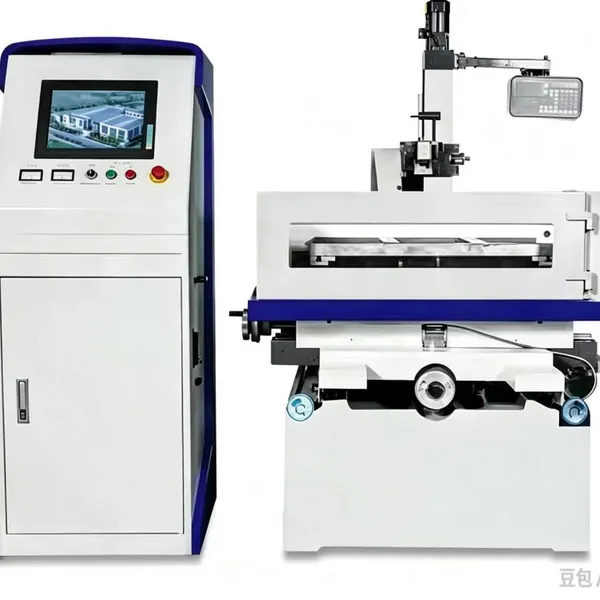 Read More
-
How Electrode Wear Changes the Result of Small Hole EDM Drilling
November 18, 2026A small hole driller that measures 0.500 mm at the start of a shift will not produce 0.500 mm holes at the end of it. The electrod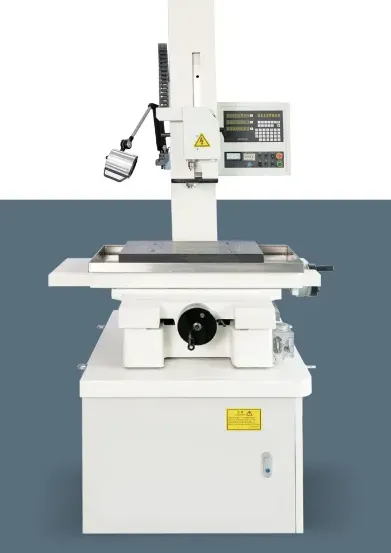 Read More
-
Wire Cutting Machine vs Sinker EDM: How the Two Processes Differ
November 17, 2026Both processes remove metal with a spark, and both run with the workpiece submerged in a dielectric. Past that point they diverge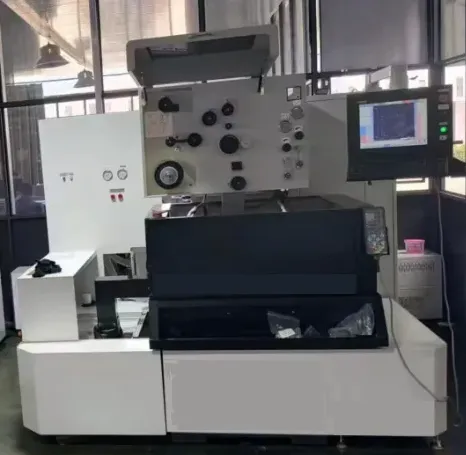 Read More
-
Small Hole EDM Drilling vs CNC Drilling for Small Diameter Holes
November 17, 2026Below about 1 mm diameter in hardened steel, a twist drill stops being a cutting tool and becomes a breaking tool. The small hole Read More

Contact Us
Recommended Products
-
 CNC Boring Machine Horizontal Boring and Milling MachineNegotiableMOQ: 1 Unit
-
Slow Wire Cutting Machine Slow Speed Wire Cutting Machine Made in ChinaUS$ 5500 - 1500000MOQ: 1 Unit
-
Double Column Vertical Lathe Cnc Vertical Lathe Vertical Turning and Boring MillNegotiableMOQ: 1 Unit
-
Cnc Vertical Lathe Vertical Turning and Boring MillNegotiableMOQ: 1 Unit
-
Cnc Vertical Five-Axis Milling Machining Center Made in ChinaUS$ 48000 - 100000MOQ: 1 Set

-
Cnc Edm Drilling Machine Automatic Wire Feed Made in China 0.15-6.0mmUS$ 5500 - 1500000MOQ: 1 Unit
-
Sevro Moto Wire Cut Machine Cnc Wedm With Larger Taper Made in ChinaUS$ 5500 - 1500000MOQ: 1 Unit
-
Cnc Milling Machine Made in ChinaUS$ 28000 - 100000MOQ: 1 Set
-
VMC(vertical Machining Centre) CNC Milling MachineUS$ 28000 - 100000MOQ: 1 Set
-
Semi-Automatic Hole Drilling EDM Machine With 0.2-6 mm Electrode, 7 MPa Cooling, 3 kW MotorUS$ 3500 - 500000MOQ: 5 Sets


-
High-Speed Hole Drilling EDM Machine With 12,000 Rpm Electrode Rotation, 1-10 mm Range, IP54US$ 3500 - 500000MOQ: 5 Sets
-
Automatic Hole Drilling EDM Machine, 30 A Pulse Power, 600 mm X-Axis Travel, PLC ControlUS$ 3500 - 500000MOQ: 5 Sets
-
Hole Drilling EDM Machine for Aerospace Turbine Blades, 0.3-2 mm Holes, 5-Axis ControlUS$ 3500 - 500000MOQ: 5 Sets
-
Hole Drilling EDM Machine With 1-Year Warranty, On-Site Technical Training, Standard CompliantUS$ 3500 - 500000MOQ: 5 Sets
-
Hole Drilling EDM Machine, 400 x 300 mm Worktable, 0.01 mm Positioning Accuracy, 220VUS$ 3500 - 500000MOQ: 5 Sets
-
Hole Drilling EDM Machine With 12-Month Warranty, Online Technical Support, Free Remote DiagnosisUS$ 3500 - 500000MOQ: 5 Sets
-
CNC Hole Drilling EDM Machine With 5-Axis Servo Control, 0.3-3 mm Electrode, 380VUS$ 3500 - 500000MOQ: 5 Sets
-
CNC Hole Drilling EDM Machine With 0.005 mm Resolution, 500 mm Z-Axis Stroke, 24 V ControlUS$ 3500 - 500000MOQ: 5 Sets
-
Hole Drilling EDM Machine for Mold Cooling Channels, 0.5-3 mm Holes, 400 mm DepthUS$ 3500 - 500000MOQ: 5 Sets
-
CNC Engraving Machine With Factory Test Report and Standard Compliant, 220V 2.2kW, 12-Month Warranty and Setup SupportNegotiableMOQ: 1 Unit