Business License

How Electrode Wear Changes the Result of Small Hole EDM Drilling
A small hole driller that measures 0.500 mm at the start of a shift will not produce 0.500 mm holes at the end of it. The electrode shortens and narrows as it cuts, and the hole it leaves behind carries a record of that change from the entry face to the exit.
Small hole edm electrode wear is the single largest source of dimensional variation in the process, ahead of machine accuracy and thermal drift. This article follows the wear from the tip to the finished part, then looks at how a small hole edm dielectric filter condition quietly controls the rate at which it happens.
1. Why Small Hole EDM Electrode Wear Decides the Hole
In wire erosion the wire is a fixed diameter passing through once, so wear changes nothing about the kerf. In small hole drilling the electrode is the shape being copied, so every micron lost at the tip appears in the hole.
The wear is not uniform. The tip face erodes more than any other area, the side walls erode where debris scrubs against them, and the transition zone just behind the tip rounds off into a radius that grows through the cut.
That rounding is why a worn electrode produces a hole with a different entry and exit. The rounded tip cuts less aggressively at the front face, so the effective cutting diameter changes as the electrode descends.
Suzhou Excellence Intelligent Technology Co Ltd describes small hole edm electrode wear to buyers as a length budget rather than a wear rate. An electrode has a fixed usable length, and every millimetre of hole consumes some of it, so the question is how many holes the budget covers at a given depth.
2. Small Hole EDM Electrode Wear Through a Deep Cut
Wear per unit depth is not constant. It rises as the hole gets deeper, because the flush reaches the tip less effectively and debris remains in the gap longer.
In the first 10 mm of a cut, debris clears easily and the wear rate sits near its lowest figure. Past roughly 50 mm, the pressure at the tip has fallen and the wear rate climbs by a third or more.
The effect compounds. A worn electrode needs a wider gap to avoid shorting, a wider gap reduces the flush velocity, and the reduced velocity accelerates wear further. That feedback loop is why deep holes fail suddenly rather than gradually.
| Depth band | Relative wear rate | What changes |
|---|---|---|
| 0-20 mm | 1.0 | Flush clears easily |
| 20-50 mm | 1.2 | Debris residence time rises |
| 50-100 mm | 1.5 | Tip pressure falls noticeably |
| above 100 mm | 2.0 or more | Wear and gap feed each other |
Reading the table as a multiplier rather than a rate explains why small hole edm electrode wear figures quoted for a 20 mm test tell a shop almost nothing about a 150 mm job.
3. How Small Hole EDM Hole Taper Develops
Small hole edm hole taper is the visible consequence of wear plus gap behaviour. As the electrode descends, its tip narrows, so the exit diameter runs smaller than the entry diameter even when the machine holds position perfectly.
A second contribution comes from the gap itself. The gap at the cutting face widens with depth because the flush is weaker, and a wider gap means a larger hole at that height. The two effects pull in opposite directions, which is why taper can be positive, negative or nearly absent depending on parameters.
| Cause | Effect on taper | Correction |
|---|---|---|
| Electrode tip wear | Exit smaller than entry | Wear compensation, lower energy |
| Gap widening at depth | Exit larger than entry | Higher flush pressure |
| Guide misalignment | Drift in one direction | Guide replacement |
| Electrode bow | Oval and tapered | Straighten or replace stock |
The practical test is to measure both faces on every new job and compare the direction of the error. A shop that knows which cause dominates can correct it with one change instead of adjusting five settings at random.
Recording small hole edm hole taper as a signed figure rather than an absolute one is worth the extra column in a log. Positive taper means the exit ran large, negative means it ran small, and the sign points straight at the mechanism instead of leaving the operator to guess.
4. The Small Hole EDM Dielectric Filter and Wear Rate
A small hole edm dielectric filter does more than keep the tank clean. It holds the particle count in the dielectric at a level where the gap can recover between discharges.
As the filter loads, fine debris recirculates. Those particles bridge the gap, the servo reverses, and the electrode spends more time retracting than cutting. Wear per unit depth climbs even though no setting has changed.
The failure is gradual and invisible on the control. A shop notices that electrodes last fewer holes than they did two months ago and changes the electrode supplier, when the filter was the cause.
Excellence Intelligent Technology recommends logging filter differential pressure alongside hole counts, because the pressure reading moves before the wear figures do. A filter changed on pressure rather than on calendar interval removes a variable that otherwise confuses every other diagnosis.
5. Measuring Small Hole EDM Electrode Wear in Practice
The measurement a shop needs is millimetres of electrode consumed per millimetre of hole drilled, not a percentage quoted by a supplier. It is easy to record and it normalises across depth.
Measure the electrode before and after a known depth, then divide. A 0.5 mm copper electrode cutting 20 mm of 50 HRC steel typically returns a figure between 0.15 and 0.25.
Repeat the measurement at twice the depth and compare. If the second figure is half again larger, the flush is the limiting factor rather than the electrode material, and the fix belongs in the dielectric circuit rather than in the consumable order.
Excellence Intelligent Technology asks buyers to record that figure on the job sheet beside the depth, because it lets a shop predict when an electrode will run out mid-hole rather than finding out during the cut. Running out mid-hole wastes the electrode and the part together.
6. Compensating for Small Hole EDM Electrode Wear
Compensation works by advancing the electrode faster than the hole deepens, so the tip stays in contact with the cutting face as it shortens. Most controls do this automatically once a wear rate is entered.
The rate entered matters less than its consistency. A control compensating against a figure that varies by 40 percent between jobs will produce holes that vary by a similar amount, even though the compensation logic itself works correctly.
Small hole edm electrode wear compensation also interacts with diameter tolerance. Compensating for length keeps the hole reaching depth, but it does nothing about the tip narrowing, which is a diameter effect. Diameter control needs either a lower energy setting or a fresh electrode for the final portion of the hole.
7. Two Small Hole EDM Wear Cases
Two shops saw their hole quality fall and traced it to different causes, which is typical of wear problems.
A connector shop drilling 0.4 mm holes through 8 mm brass noticed that exit diameters had drifted 0.015 mm below entry over three weeks. Nothing in the program had changed. The small hole edm dielectric filter had been in service for eleven months, and its differential pressure had risen to twice the recommended change point. Replacing it brought the wear rate back to its earlier figure and the taper within 0.006 mm, without touching a single electrical setting.
A second shop found taper in one direction rather than radially. The ceramic guide had worn oval, and a new guide removed it entirely.
Both cases share a feature worth naming. Nothing on the control had changed in either shop, so both had started to suspect the electrodes themselves. Suzhou Excellence Intelligent Technology keeps small hole edm electrode wear, taper direction and filter pressure on one sheet for this reason, since three columns side by side identify the culprit faster than any single reading.
8. Small Hole EDM Hole Taper Correction Methods
Correction should follow the cause identified in section three rather than proceed by trial. Where tip wear dominates, the answer is a lower energy finishing segment over the last few millimetres.
Where gap widening dominates, raising flush pressure or switching to a multi-hole electrode restores the condition at depth. A multi-hole tube distributes the flush around the tip instead of through a single bore, which keeps the gap tighter at the bottom.
Where the cause is mechanical, no parameter change helps. Guide wear, electrode bow and spindle runout produce a taper that follows a direction, and the cure is a part replacement rather than a setting. A quick check separates the two: rotate the electrode by 90 degrees and recut. A mechanical small hole edm hole taper rotates with the tool, while a wear-driven one does not.
9. Maintaining the Small Hole EDM Dielectric Filter Circuit
The filter is one component of a circuit that includes the pump, the resin bed, the rotary union and the nozzle. Wear problems usually trace to the weakest of those rather than to the filter alone.
| Item | Check | Typical interval |
|---|---|---|
| Filter element | Differential pressure | On reading, not calendar |
| Resin bed | Water resistivity | Monthly |
| Rotary union seals | Pressure loss at the tool | Six months |
| Nozzle and guide | Clearance and ovality | Monthly |
Our team suggests measuring pressure at the guide rather than at the pump, because a healthy pump reading can hide a restriction downstream. That single change of measurement point resolves a large share of wear complaints without any other intervention.
10. Small Hole EDM Wear Questions
10.1 How much electrode wear is normal on a deep hole?
Between 0.15 and 0.25 millimetres of electrode per millimetre of hole is a reasonable band on copper in hardened steel, rising above 0.4 once a hole runs beyond roughly 100 mm depth. Tungsten carbide sits under 0.1 in the very same conditions. Treat any figure more than double the shop's own recent baseline as a signal to check the flush circuit before ordering different electrodes, because a material change rarely explains a sudden shift and usually produces a slow drift across several batches instead.
10.2 Can taper be eliminated completely?
It can be reduced rather than removed. A combination of a low-energy finishing segment, balanced flush and a fresh electrode for the final portion of the hole brings taper under 0.01 mm on most production work. Below that figure, measurement uncertainty and electrode straightness start to dominate the result rather than the process itself. If a drawing demands zero taper, the practical route is to drill undersize and ream afterwards, or to accept the figure the process can hold and design the fit around it.
10.3 Does water quality affect electrode wear?
It does, through conductivity and particle count. Water outside the 5-50 kilo-ohm-cm band changes how the gap breaks down, which shifts the energy delivered per discharge and the crater it leaves. Suspended particles cause short circuits that make the servo retract, and retraction time is wear without cutting. Resin and filtration together hold both conditions, which is why a resistivity log is worth keeping alongside the pressure log, and why a sudden change in either deserves attention before the next batch starts.
10.4 How often should the small hole edm dielectric filter be changed?
On differential pressure rather than on a fixed interval, because the loading rate depends on how much material the shop removes. A shop cutting carbide loads a filter far faster than one cutting aluminium or brass, because carbide debris is finer and packs the element. Log the pressure weekly, change at the manufacturer's stated rise, and note the hole count at each change. After three changes the shop has its own interval, which is more reliable than any generic recommendation and survives a change of operator.
Recently Posted
-
Wire Cutting Machine Terms You Will Meet in a Supplier Quotation
November 18, 2026A quotation for a wire cutting machine arrives as a table of terms, half of which describe the machine and half of which describe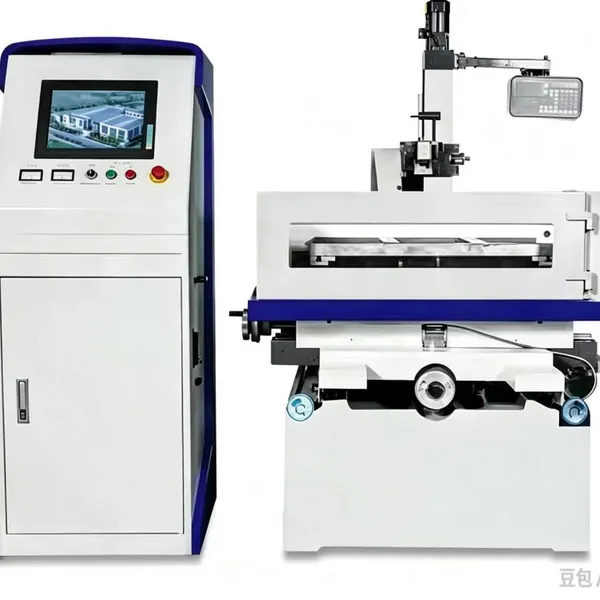 Read More
-
Wire Cutting Machine vs Sinker EDM: How the Two Processes Differ
November 17, 2026Both processes remove metal with a spark, and both run with the workpiece submerged in a dielectric. Past that point they diverge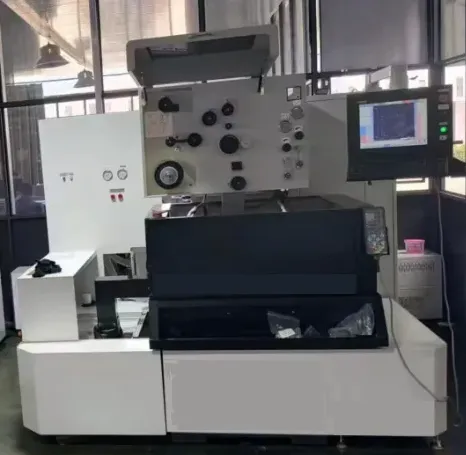 Read More
-
Small Hole EDM Drilling vs CNC Drilling for Small Diameter Holes
November 17, 2026Below about 1 mm diameter in hardened steel, a twist drill stops being a cutting tool and becomes a breaking tool. The small hole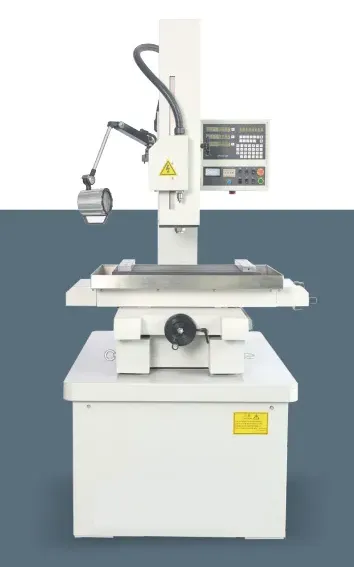 Read More
-
A Practical Introduction to Small Hole EDM Drilling Machines
November 16, 2026A small hole EDM drilling machine sinks narrow holes through hard metal by spark erosion, using a rotating tubular electrode fed t Read More

Contact Us
Recommended Products
-
 CNC Boring Machine Horizontal Boring and Milling MachineNegotiableMOQ: 1 Unit
-
Slow Wire Cutting Machine Slow Speed Wire Cutting Machine Made in ChinaUS$ 5500 - 1500000MOQ: 1 Unit
-
Double Column Vertical Lathe Cnc Vertical Lathe Vertical Turning and Boring MillNegotiableMOQ: 1 Unit
-
Cnc Vertical Lathe Vertical Turning and Boring MillNegotiableMOQ: 1 Unit
-
Cnc Vertical Five-Axis Milling Machining Center Made in ChinaUS$ 48000 - 100000MOQ: 1 Set

-
Cnc Edm Drilling Machine Automatic Wire Feed Made in China 0.15-6.0mmUS$ 5500 - 1500000MOQ: 1 Unit
-
Sevro Moto Wire Cut Machine Cnc Wedm With Larger Taper Made in ChinaUS$ 5500 - 1500000MOQ: 1 Unit
-
Cnc Milling Machine Made in ChinaUS$ 28000 - 100000MOQ: 1 Set
-
VMC(vertical Machining Centre) CNC Milling MachineUS$ 28000 - 100000MOQ: 1 Set
-
Semi-Automatic Hole Drilling EDM Machine With 0.2-6 mm Electrode, 7 MPa Cooling, 3 kW MotorUS$ 3500 - 500000MOQ: 5 Sets


-
High-Speed Hole Drilling EDM Machine With 12,000 Rpm Electrode Rotation, 1-10 mm Range, IP54US$ 3500 - 500000MOQ: 5 Sets
-
Automatic Hole Drilling EDM Machine, 30 A Pulse Power, 600 mm X-Axis Travel, PLC ControlUS$ 3500 - 500000MOQ: 5 Sets
-
Hole Drilling EDM Machine for Aerospace Turbine Blades, 0.3-2 mm Holes, 5-Axis ControlUS$ 3500 - 500000MOQ: 5 Sets
-
Hole Drilling EDM Machine With 1-Year Warranty, On-Site Technical Training, Standard CompliantUS$ 3500 - 500000MOQ: 5 Sets
-
Hole Drilling EDM Machine, 400 x 300 mm Worktable, 0.01 mm Positioning Accuracy, 220VUS$ 3500 - 500000MOQ: 5 Sets
-
Hole Drilling EDM Machine With 12-Month Warranty, Online Technical Support, Free Remote DiagnosisUS$ 3500 - 500000MOQ: 5 Sets
-
CNC Hole Drilling EDM Machine With 5-Axis Servo Control, 0.3-3 mm Electrode, 380VUS$ 3500 - 500000MOQ: 5 Sets
-
CNC Hole Drilling EDM Machine With 0.005 mm Resolution, 500 mm Z-Axis Stroke, 24 V ControlUS$ 3500 - 500000MOQ: 5 Sets
-
Hole Drilling EDM Machine for Mold Cooling Channels, 0.5-3 mm Holes, 400 mm DepthUS$ 3500 - 500000MOQ: 5 Sets
-
CNC Engraving Machine With Factory Test Report and Standard Compliant, 220V 2.2kW, 12-Month Warranty and Setup SupportNegotiableMOQ: 1 Unit