Business License

Wire Cutting Machine vs Sinker EDM: How the Two Processes Differ
Both processes remove metal with a spark, and both run with the workpiece submerged in a dielectric. Past that point they diverge sharply, because one copies the shape of a travelling wire and the other copies the shape of a formed electrode pressed into the cavity.
A shop comparing a wire cutting machine vs sinker edm is really comparing a two-dimensional process against a three-dimensional one. This article sets the two against each other, then widens the comparison to the decisions shops actually face: wire cutting machine vs milling, and wire cutting vs laser cutting.
1. Where Wire Cutting and Sinker EDM Split Apart
The wire passes through the work once and leaves a slot. The geometry it can produce is defined by a closed path, so the part must be reachable by a continuous wire from outside.
A sinker electrode descends into a cavity and burns its own profile into the metal. Because the electrode has a shape in three dimensions, it can produce a pocket, a rib or a textured floor that no wire will reach.
The consequence is visible in the tooling. A wire cutting machine needs wire, guides and a program. A sinker needs an electrode machined to the cavity shape plus a way to hold it, and that electrode is a second job before the first one starts.
Suzhou Excellence Intelligent Technology Co Ltd finds that buyers often arrive asking for a wire cutting machine vs sinker edm comparison when what they need is the answer to a narrower question: does the part contain a cavity, or does it contain a profile.
That framing also explains why a wire cutting vs sinker edm quotation cannot be compared line by line. One quote prices cutting time, the other prices an electrode plus cutting time, and the electrode line looks like overhead until it is set against the number of cavities it will serve.
2. Wire Cutting vs Sinker EDM on Geometry and Throughput
Throughput favours wire on anything that can be described as a profile cut from a plate. A 100 mm thick part with a complex outline is straightforward work on a wire machine and awkward on a sinker, where the electrode must be made first.
Deep, narrow cavities invert the advantage. A sinker burns downward with an electrode that wears along its whole face, while a wire cannot enter a closed pocket at all.
Grain direction in the electrode matters on the sinker side and is often neglected. A fine-grained graphite electrode holds detail but wears faster at corners, so the number of electrodes a job needs is a function of detail rather than of cavity volume.
| Feature | Wire cutting | Sinker EDM |
|---|---|---|
| Through-profile cut | Straightforward | Requires through-electrode |
| Blind cavity | Not possible | Core capability |
| Sharp internal corner | Limited by wire radius | Limited by electrode corner |
| Lead time | Programming step | Electrode to be machined first |
Read the lead-time row carefully, because it decides small jobs. A one-off cavity that takes an hour to burn may need three hours of electrode machining before the EDM starts, and that preparation is where sinker work loses to wire on simple parts.
Excellence Intelligent Technology sees the same pattern in repair work. A worn cavity insert that needs re-cutting often arrives as a wire cutting vs sinker edm question, and the answer is usually wire because the worn cavity already exists and the job is to reproduce its outline rather than to sink a new pocket.
3. The Wire Cutting Machine vs Milling Decision
Most shops face the wire cutting machine vs milling choice far more often than the wire-versus-sinker one, and it comes down to force and hardness. Milling applies a cutting force through a tool that deflects, which sets a floor on feature size in hard material.
Below roughly 1 mm in hardened steel, an end mill small enough to enter the feature is also fragile enough to break, and the deflection before it breaks ruins the wall it was cutting.
Wire erosion carries no force, so a 0.4 mm internal corner in 60 HRC steel is routine. The trade is time: a pocket that a mill opens in twenty minutes may take two hours on a wire machine, because erosion removes volume slowly and follows a path rather than clearing an area.
The rule that holds up across most shops, and the one a wire cutting machine vs milling quote tends to confirm, is that milling owns areas and wire owns profiles. When a part needs a deep pocket with a sharp internal corner, the sensible route is often a milled cavity followed by a wire pass to finish the corner.
4. Wire Cutting vs Laser Cutting on Thickness and Edge
The wire cutting vs laser cutting comparison turns on thickness, edge condition and material. Laser cuts faster on thin sheet and struggles as section height rises, because the beam loses focus and the kerf widens.
| Thickness | Practical process | Note |
|---|---|---|
| Up to 3 mm | Laser | Fast, tight kerf |
| 3-10 mm | Either | Depends on tolerance and edge |
| Above 20 mm | Wire | Laser edge quality falls away |
| Above 100 mm | Wire | Laser not practical |
The edge condition differs in kind, not just in quality. A laser leaves a recast layer and a striated cut face with a taper that increases with thickness, while a wire leaves a straighter wall with a much shallower affected layer.
For a die component where the cut face becomes a working edge, that difference decides the process. Excellence Intelligent Technology advises buyers to specify the edge requirement on the drawing, because a laser-cut edge that meets the drawing dimensionally may still fail on hardness or micro-cracking.
A frequent third option in that argument is a wire cutting vs sinker edm comparison applied to a part that neither process suits, when the real answer is a milled blank followed by one wire pass to finish the profile. Sequencing the processes costs less than choosing the wrong single one.
5. Tooling Cost Across Wire Cutting and Sinker EDM
The cost structures differ in where the money sits. A wire job carries consumable cost per metre of cut with almost no preparation, while a sinker job front-loads its cost into the electrode.
For a batch of one, the electrode usually makes the sinker route the expensive option. For a batch of two hundred identical cavities, the electrode cost spreads across the volume and the sinker becomes competitive, because the burn itself is fast once the electrode exists.
Wire consumption does not fall with volume in the same way. Each part consumes wire in proportion to its cut length, so the per-part cost stays flat while the sinker's per-part cost declines.
Suzhou Excellence Intelligent Technology puts the break-even for a wire cutting vs sinker edm cost comparison somewhere near 40 cavities on a medium electrode, though the figure moves with cavity depth. Below it the electrode dominates, while above it the burn time dominates and a second electrode for wear allowance has to be costed in as well.
6. Surface Finish in Wire Cutting vs Sinker EDM
Both processes reach fine finishes, and both do it by reducing energy per discharge rather than by changing the tool. Wire erosion reaches Ra 0.4 micron with four or five trim passes, while a sinker reaches similar figures with a low-energy orbit pass.
The difference appears in the direction of the marks. A wire leaves a surface striated along the cut direction, which is usually favourable for a sliding surface because the striations run along the direction of motion.
A sinker leaves a matte surface with no directional pattern, which can be an advantage on a sealing face and a disadvantage where lubrication retention matters.
7. Two Shops Comparing Wire Cutting and Milling
Two shops ran the same comparison and reached opposite conclusions, because the parts differed in volume and hardness.
A toolroom was milling 0.8 mm wide slots in 58 HRC D2 inserts and breaking two end mills per plate. Moving the slots to wire erosion removed the breakage entirely, and the wire cutting machine vs milling arithmetic came out in favour of wire once the tool cost and the scrapped inserts were counted. Cycle time rose from 25 minutes to 70 per plate, but the shop stopped buying 0.6 mm carbide cutters by the box.
A second shop kept milling its 3 mm wide slots in pre-hardened steel at 32 HRC. Their cutters lasted a week each, and wire would have taken four times as long for no gain in tolerance.
8. Wire Cutting vs Laser Cutting at the Drawing Stage
The wire cutting vs laser cutting decision is often made at the drawing rather than at the machine, because the tolerance a designer writes decides which shop can quote the part.
A profile held to plus or minus 0.02 mm with a square edge and no recast layer describes wire erosion. The same profile with a general tolerance and a deburred edge describes laser, and the laser quote will be a fraction of the wire quote.
The mistake that recurs is a drawing that specifies a laser-tight tolerance without specifying the edge condition, which invites a laser quote that meets the dimension and fails the function. Adding one note about the cut face avoids that argument later.
9. A Decision Order for Wire Cutting and Its Alternatives
Ask whether the feature is a cavity or a profile first. That single question separates sinker from wire and prevents most of the wasted quotations.
If it is a profile, ask for the hardness and the smallest internal radius. Hard material with a tight radius points to wire, while soft material with a generous radius points to milling or laser depending on thickness.
Then check the volume. A single profile in soft steel may suit a wire cutting machine vs milling calculation that favours the mill, while two hundred identical profiles favour whichever process needs the least attention per part. The same three questions also settle a wire cutting vs laser cutting comparison on thin work, where tolerance and edge condition do the deciding.
Our team suggests writing all three candidate processes into the enquiry and asking each supplier to state what it cannot hold. The answers usually eliminate two options immediately, and the remaining quote is easier to trust because the limits are on the table.
10. Wire Cutting Process Questions
10.1 Can a wire cutting machine produce a blind pocket?
Not directly, because the wire must pass right through the workpiece on a continuous path. A pocket can be produced by stacking a cavity plate with a backing plate and cutting the profile through the cavity plate before assembly, or by removing the centre as a slug and closing the bottom with a separate plate afterwards. Where a genuine blind cavity is needed, a sinker EDM burns it with a formed electrode, and that dividing line between the two processes explains most of the enquiries that reach our team.
10.2 Is wire erosion slower than milling on soft steel?
Considerably slower on area removal, and comparable on thin profiles. A mill clears a pocket by removing volume, while a wire follows a path and erodes the kerf alone. On a 10 mm thick plate, a profile cut may take a wire machine fifteen minutes against five on a mill, which is a reasonable trade once the tolerance and the corner condition are counted. On a 100 mm deep pocket, wire erosion is the wrong tool entirely and no amount of parameter tuning changes that.
10.3 When does laser cutting beat both EDM processes?
On thin sheet where the tolerance is general and the edge condition is not functional. Laser cuts 2 mm mild steel several times faster than wire erosion and needs no fixturing beyond a bed. It loses ground as thickness rises and as the cut face becomes a working edge, because both the recast layer and the kerf taper grow with section height. The crossover sits somewhere between 3 and 10 mm depending on the quality the drawing demands and on how the part is subsequently used.
10.4 Do wire and sinker share a dielectric system?
They share the principle and not the hardware. Both use a dielectric to insulate the gap and flush debris, but wire machines run deionised water while most sinkers run hydrocarbon oil. Water suits the high flush rates and the narrow kerf of wire work, while oil handles the higher discharge energies and the deeper cavities that sinker work produces. A shop running both keeps two separate systems, two separate maintenance routines and two sets of operator training, which is a cost worth counting before buying a second machine type.
Recently Posted
-
Wire Cutting Machine Terms You Will Meet in a Supplier Quotation
November 18, 2026A quotation for a wire cutting machine arrives as a table of terms, half of which describe the machine and half of which describe Read More
-
Small Hole EDM Drilling vs CNC Drilling for Small Diameter Holes
November 17, 2026Below about 1 mm diameter in hardened steel, a twist drill stops being a cutting tool and becomes a breaking tool. The small hole Read More
-
A Practical Introduction to Small Hole EDM Drilling Machines
November 16, 2026A small hole EDM drilling machine sinks narrow holes through hard metal by spark erosion, using a rotating tubular electrode fed t Read More
-
CNC Wire Cutting vs Manual Wire Cutting: What Changes in the Part
November 13, 2026The part is not the point of difference between a manual wire cutting machine and one with wire cutting machine cnc control. The d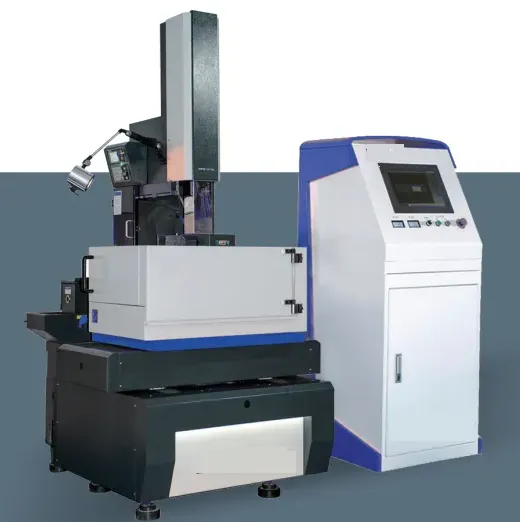 Read More

Contact Us
Recommended Products
-
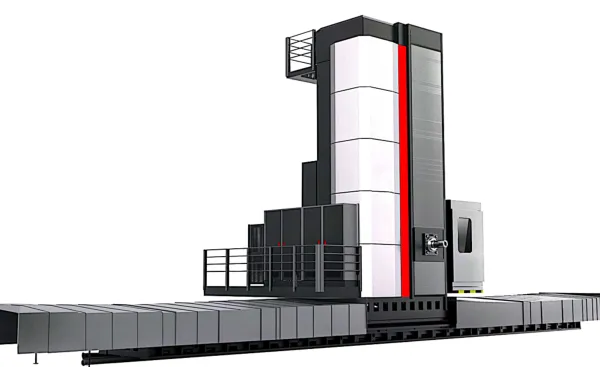
 CNC Boring Machine Horizontal Boring and Milling MachineNegotiableMOQ: 1 Unit
-
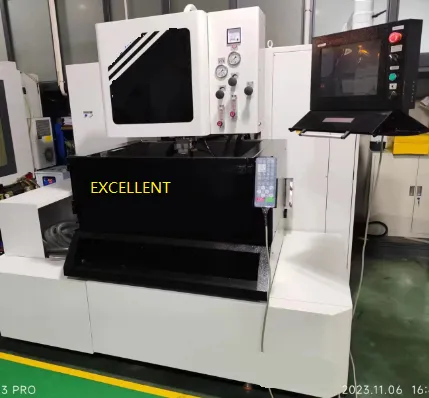
Slow Wire Cutting Machine Slow Speed Wire Cutting Machine Made in ChinaUS$ 5500 - 1500000MOQ: 1 Unit
-
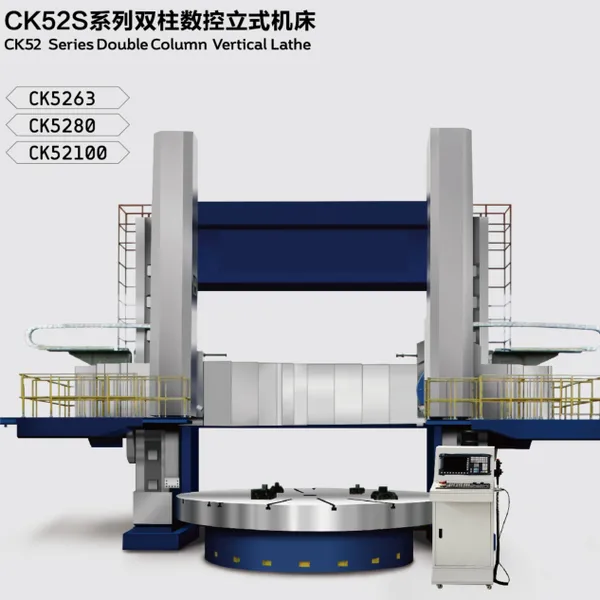
Double Column Vertical Lathe Cnc Vertical Lathe Vertical Turning and Boring MillNegotiableMOQ: 1 Unit
-
Cnc Vertical Lathe Vertical Turning and Boring MillNegotiableMOQ: 1 Unit
-
Cnc Vertical Five-Axis Milling Machining Center Made in ChinaUS$ 48000 - 100000MOQ: 1 Set

-
Cnc Edm Drilling Machine Automatic Wire Feed Made in China 0.15-6.0mmUS$ 5500 - 1500000MOQ: 1 Unit
-
Sevro Moto Wire Cut Machine Cnc Wedm With Larger Taper Made in ChinaUS$ 5500 - 1500000MOQ: 1 Unit
-
Cnc Milling Machine Made in ChinaUS$ 28000 - 100000MOQ: 1 Set
-
VMC(vertical Machining Centre) CNC Milling MachineUS$ 28000 - 100000MOQ: 1 Set
-
Semi-Automatic Hole Drilling EDM Machine With 0.2-6 mm Electrode, 7 MPa Cooling, 3 kW MotorUS$ 3500 - 500000MOQ: 5 Sets


-
High-Speed Hole Drilling EDM Machine With 12,000 Rpm Electrode Rotation, 1-10 mm Range, IP54US$ 3500 - 500000MOQ: 5 Sets
-
Automatic Hole Drilling EDM Machine, 30 A Pulse Power, 600 mm X-Axis Travel, PLC ControlUS$ 3500 - 500000MOQ: 5 Sets
-
Hole Drilling EDM Machine for Aerospace Turbine Blades, 0.3-2 mm Holes, 5-Axis ControlUS$ 3500 - 500000MOQ: 5 Sets
-
Hole Drilling EDM Machine With 1-Year Warranty, On-Site Technical Training, Standard CompliantUS$ 3500 - 500000MOQ: 5 Sets
-
Hole Drilling EDM Machine, 400 x 300 mm Worktable, 0.01 mm Positioning Accuracy, 220VUS$ 3500 - 500000MOQ: 5 Sets
-
Hole Drilling EDM Machine With 12-Month Warranty, Online Technical Support, Free Remote DiagnosisUS$ 3500 - 500000MOQ: 5 Sets
-
CNC Hole Drilling EDM Machine With 5-Axis Servo Control, 0.3-3 mm Electrode, 380VUS$ 3500 - 500000MOQ: 5 Sets
-
CNC Hole Drilling EDM Machine With 0.005 mm Resolution, 500 mm Z-Axis Stroke, 24 V ControlUS$ 3500 - 500000MOQ: 5 Sets
-
Hole Drilling EDM Machine for Mold Cooling Channels, 0.5-3 mm Holes, 400 mm DepthUS$ 3500 - 500000MOQ: 5 Sets
-
CNC Engraving Machine With Factory Test Report and Standard Compliant, 220V 2.2kW, 12-Month Warranty and Setup SupportNegotiableMOQ: 1 Unit