Business License

Wire Cutting Machine Terms You Will Meet in a Supplier Quotation
A quotation for a wire cutting machine arrives as a table of terms, half of which describe the machine and half of which describe how the buyer is expected to operate it. Skipping the second group is how a shop buys a machine that meets its specification on paper and underperforms on the floor.
Three terms in that table carry more weight than their position suggests: wire cutting machine duty cycle, wire cutting machine water resistivity and the wire cutting machine power supply rating. Each is easy to read past and each decides something about daily work.
1. Why Wire Cutting Machine Terms Get Missed in a Quotation
Quotations are read in a hurry, and the eye goes to the figures that can be compared across suppliers: travel, accuracy, taper, price. Those four appear in the same place in every quote, which makes them easy to line up.
The terms that differ in placement get skipped. Duty cycle may appear as a footnote, water resistivity as a line in a utilities section, and the power supply as a single figure without context.
Those three are also the terms most likely to be copied from a template without adjustment. A supplier quoting a standard model may leave a figure that describes a different configuration, which is why the same number means different things in two quotes.
Suzhou Excellence Intelligent Technology Co Ltd annotates each figure with the condition it was measured under, because a duty cycle without a stated ambient temperature and a resistivity range without a stated control method describe nothing a buyer can plan against.
2. Wire Cutting Machine Duty Cycle and What It Predicts
Duty cycle describes how much of the working time the machine can spend actually eroding. The rest goes to wire retraction, flushing recovery and repositioning, and a low figure means the machine pauses more than the buyer expected.
A wire cutting machine duty cycle quoted at 70 percent suggests that for every ten minutes of cutting the machine spends three minutes recovering. At 40 percent it spends six, which doubles the wall-clock time for the same part.
The figure also interacts with workpiece thickness. Thick sections produce more debris, so recovery takes longer and the effective duty cycle falls below the quoted value even when nothing on the control has changed.
| Duty cycle | Recovery time per 10 min | Effect on a 3 hour cut |
|---|---|---|
| 80 percent | 2 minutes | 3 hours 45 minutes |
| 70 percent | 3 minutes | 4 hours 17 minutes |
| 50 percent | 5 minutes | 6 hours |
Read the table before comparing prices, because a cheaper machine with a low duty cycle can cost more per part than an expensive one that runs closer to continuous.
Suzhou Excellence Intelligent Technology asks buyers to convert the quoted wire cutting machine duty cycle into wall-clock hours for their own heaviest part. That single conversion usually settles a comparison that had been argued on price for a week.
3. Wire Cutting Machine Water Resistivity and Why It Appears
Water resistivity describes how well the dielectric resists carrying current. Too low and the gap breaks down before the servo is ready, while too high and the discharge becomes unstable at the edges of the cut.
The useful range sits between roughly 5 and 50 kilo-ohm-centimetres, maintained by a resin bed rather than by the water supply itself. A machine plumbed to tap water will drift out of that band within days.
Wire cutting machine water resistivity appears in a quotation because it implies a consumable. A machine that specifies a resin bed commits the buyer to resin changes, and a quote that omits the resin line is quoting a machine the buyer cannot run as described.
Excellence Intelligent Technology lists the resistivity band and the resin capacity together, since the second determines how often the first needs attention during a production week.
A simple log works well here. Recording wire cutting machine water resistivity once a shift for a month tells a shop how fast its resin depletes, and that figure is more useful than any recommended change interval because it reflects the local water and the actual cutting load.
4. The Wire Cutting Machine Power Supply Line Item
The wire cutting machine power supply figure in a quotation usually describes the incoming supply the machine needs, not the generator it contains. Those are different items and confusing them causes installation delays.
| Term | What it means | Typical figure |
|---|---|---|
| Connected load | Total demand at full output | 8-15 kVA |
| Supply requirement | Voltage, phase, frequency | 380 V three phase 50 Hz |
| Generator rating | Discharge power to the gap | 3-8 kW |
| Duty at rating | Continuous or intermittent | Intermittent |
The connected load decides whether a workshop needs a supply upgrade, and that upgrade can take longer than the machine delivery. A buyer who reads the generator rating and assumes it describes the site requirement discovers the difference when the electrician arrives.
A second trap sits in the voltage figure. A machine configured for one supply and delivered to a site with another needs a transformer, and the cost of that transformer is rarely in the quotation the buyer compared against a competitor.
The wire cutting machine power supply also constrains the generator settings a shop can use. A site running near the limit of its supply will see voltage sag under heavy discharge, and the machine's own protection cuts energy to compensate, which shows up as a slower cut nobody can explain.
5. Wire Cutting Machine Terms Around Wire and Guides
Wire and guide specifications appear as short lines but they set the consumable budget. Wire diameter range, guide type and tension range together decide which jobs the machine accepts and what each metre of cut costs.
A machine listing a 0.1 to 0.3 mm wire range can cut fine work, while one starting at 0.15 mm cannot reach the same small radii. The difference is a single line in the quotation and a whole category of work in practice.
Guide type matters for a different reason. Ceramic guides wear predictably and cost little to replace, while diamond guides last longer and cost considerably more. A quote that does not name the guide type is a quote that leaves the consumable line open.
6. Wire Cutting Machine Terms on Travel and Accuracy
Travel figures are the most misread numbers on any quotation, because the axis stroke is not the working envelope. A quotation listing 400 mm of X travel describes a machine that accepts roughly 280 mm of part once clamps are counted.
Accuracy terms need the same treatment. Positioning accuracy, repeatability and squareness are three different figures, and a quote that lists one of them is not describing the other two.
Repeatability is the figure that matters for production, since it describes the spread across a batch rather than the closeness of a single move. A machine with 0.005 mm positioning and 0.01 mm repeatability will hold a batch to 0.01 mm, not to 0.005 mm.
Ask which standard the accuracy figure follows, because two suppliers can quote the same number measured over different lengths. A straightness figure taken over 100 mm and one taken over 300 mm describe very different machines.
7. Two Wire Cutting Machine Quotation Comparisons
Two buyers compared quotations term by term and reached different decisions from similar documents.
The first lined up travel, accuracy and price, and chose the cheaper machine. The wire cutting machine duty cycle sat in a footnote at 45 percent, and the wire cutting machine water resistivity requirement was listed without a resin capacity. Within three months the shop was running six-hour parts where a competitor quoted four, and replacing resin monthly because the tank was smaller than the specification implied.
The second buyer asked three questions about the same document: what the duty cycle was measured at, what resin volume the resistivity band required, and what the connected load was. The answers changed the shortlist, and the machine purchased held its cycle times across a year of production.
8. Wire Cutting Machine Terms That Reveal a Compromise
Some terms in a quotation quietly describe where a supplier saved money. Recognising them is more useful than comparing headline figures.
A low wire cutting machine power supply rating on a machine with a large table usually means the generator cannot drive the full envelope at high energy. A high taper rating paired with a modest Z height means the angle holds on thin work and falls away above a stated height.
Our team suggests reading the quotation backwards, starting from the smallest figures and asking what each one constrains. The constraints are usually more informative than the capabilities, because capabilities are advertised and constraints are inherited.
Two lines deserve a second look in every document. A wire cutting machine duty cycle quoted without a thickness, and a wire cutting machine power supply figure quoted without a phase, are both incomplete rather than merely brief. Ask for the missing condition and note whether the answer arrives quickly.
9. Building a Wire Cutting Machine Terms Glossary for the Shop
A shop that buys machines occasionally benefits from keeping its own glossary of the terms it had to look up. The file saves the same research on the next purchase and gives a shared vocabulary for service calls.
Start with the three terms above, then add the terms that caused confusion during installation. Commissioning conversations are a rich source, because they surface the gap between what the quotation said and what the technician assumed.
Excellence Intelligent Technology includes a term sheet with every quotation it issues, and the company updates it when a buyer raises something it does not cover.
10. Wire Cutting Machine Quotation Questions
10.1 What duty cycle should a shop expect on a mid-size machine?
Sixty to eighty percent is a realistic band for a mid-size machine cutting steel between 20 and 80 mm thick, with the higher figure belonging to machines with better flushing. Ask what thickness and material the figure was measured on, because a duty cycle quoted on 20 mm aluminium will not survive a shift of 100 mm tool steel at the same setting. Treat any figure above 85 percent as a claim that needs a test cut behind it, taken on the thickest part the shop expects to run.
10.2 Does wire cutting machine water resistivity need a chiller?
Resistivity and temperature are separate concerns and both affect the cut. A resin bed holds resistivity, while a chiller holds temperature, and a machine without a chiller will see its dielectric warm steadily through a long shift as the pump works against the restriction of the cut. Warm water changes conductivity and moves the gap, so a shop cutting tolerance work should budget for proper temperature control even where the quotation does not mention it as a separate line item.
10.3 How do I check the power supply requirement before ordering?
Ask for the connected load in kVA, the voltage, the phase and the frequency, then give those four figures to an electrician who can confirm the site can supply them without an upgrade. Do this check before signing, because a supply upgrade can take considerably longer than the machine takes to build and deliver. Where the site voltage differs, ask the supplier to quote the transformer as a separate line item so the cost appears in the comparison rather than arriving later.
10.4 Which quotation terms most often differ between similar machines?
Duty cycle, resin capacity, guide type and connected load differ most between two quotes, because they are the items a supplier can vary without changing the visible specification sheet at all. Two machines with identical travel and accuracy figures can differ by a third on duty cycle and by half on consumable cost across the first year of use. Ask for all four on a single line in the comparison table rather than accepting them scattered through footnotes on several different pages.
Recently Posted
-
Wire Cutting Machine vs Sinker EDM: How the Two Processes Differ
November 17, 2026Both processes remove metal with a spark, and both run with the workpiece submerged in a dielectric. Past that point they diverge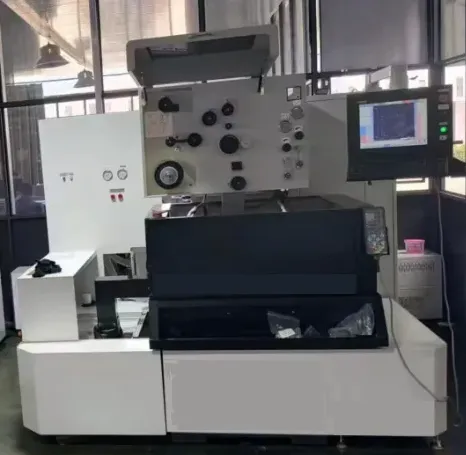 Read More
-
Small Hole EDM Drilling vs CNC Drilling for Small Diameter Holes
November 17, 2026Below about 1 mm diameter in hardened steel, a twist drill stops being a cutting tool and becomes a breaking tool. The small hole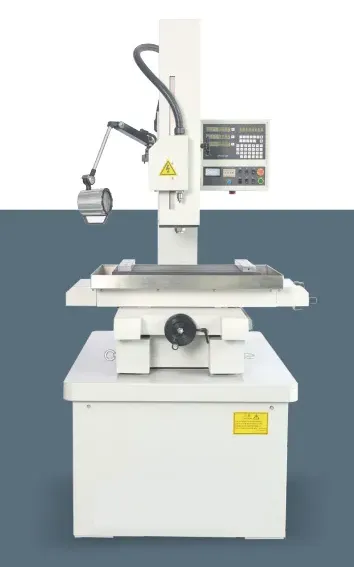 Read More
-
A Practical Introduction to Small Hole EDM Drilling Machines
November 16, 2026A small hole EDM drilling machine sinks narrow holes through hard metal by spark erosion, using a rotating tubular electrode fed t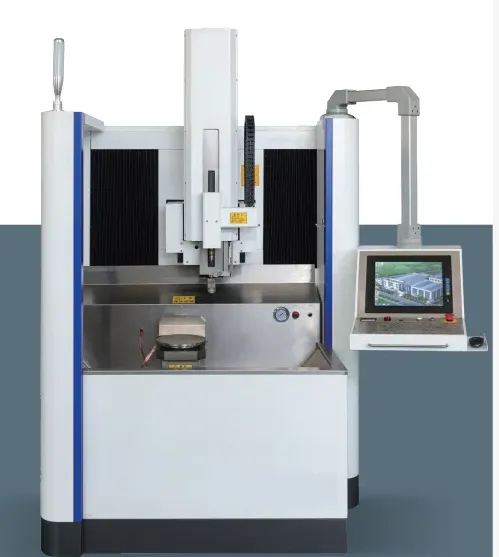 Read More
-
CNC Wire Cutting vs Manual Wire Cutting: What Changes in the Part
November 13, 2026The part is not the point of difference between a manual wire cutting machine and one with wire cutting machine cnc control. The d Read More

Contact Us
Recommended Products
-
 CNC Boring Machine Horizontal Boring and Milling MachineNegotiableMOQ: 1 Unit
-
Slow Wire Cutting Machine Slow Speed Wire Cutting Machine Made in ChinaUS$ 5500 - 1500000MOQ: 1 Unit
-
Double Column Vertical Lathe Cnc Vertical Lathe Vertical Turning and Boring MillNegotiableMOQ: 1 Unit
-
Cnc Vertical Lathe Vertical Turning and Boring MillNegotiableMOQ: 1 Unit
-
Cnc Vertical Five-Axis Milling Machining Center Made in ChinaUS$ 48000 - 100000MOQ: 1 Set
-
Cnc Edm Drilling Machine Automatic Wire Feed Made in China 0.15-6.0mmUS$ 5500 - 1500000MOQ: 1 Unit
-
Sevro Moto Wire Cut Machine Cnc Wedm With Larger Taper Made in ChinaUS$ 5500 - 1500000MOQ: 1 Unit
-
Cnc Milling Machine Made in ChinaUS$ 28000 - 100000MOQ: 1 Set
-
VMC(vertical Machining Centre) CNC Milling MachineUS$ 28000 - 100000MOQ: 1 Set
-
Semi-Automatic Hole Drilling EDM Machine With 0.2-6 mm Electrode, 7 MPa Cooling, 3 kW MotorUS$ 3500 - 500000MOQ: 5 Sets



-
High-Speed Hole Drilling EDM Machine With 12,000 Rpm Electrode Rotation, 1-10 mm Range, IP54US$ 3500 - 500000MOQ: 5 Sets
-
Automatic Hole Drilling EDM Machine, 30 A Pulse Power, 600 mm X-Axis Travel, PLC ControlUS$ 3500 - 500000MOQ: 5 Sets
-
Hole Drilling EDM Machine for Aerospace Turbine Blades, 0.3-2 mm Holes, 5-Axis ControlUS$ 3500 - 500000MOQ: 5 Sets
-
Hole Drilling EDM Machine With 1-Year Warranty, On-Site Technical Training, Standard CompliantUS$ 3500 - 500000MOQ: 5 Sets
-
Hole Drilling EDM Machine, 400 x 300 mm Worktable, 0.01 mm Positioning Accuracy, 220VUS$ 3500 - 500000MOQ: 5 Sets
-
Hole Drilling EDM Machine With 12-Month Warranty, Online Technical Support, Free Remote DiagnosisUS$ 3500 - 500000MOQ: 5 Sets
-
CNC Hole Drilling EDM Machine With 5-Axis Servo Control, 0.3-3 mm Electrode, 380VUS$ 3500 - 500000MOQ: 5 Sets
-
CNC Hole Drilling EDM Machine With 0.005 mm Resolution, 500 mm Z-Axis Stroke, 24 V ControlUS$ 3500 - 500000MOQ: 5 Sets
-
Hole Drilling EDM Machine for Mold Cooling Channels, 0.5-3 mm Holes, 400 mm DepthUS$ 3500 - 500000MOQ: 5 Sets
-
CNC Engraving Machine With Factory Test Report and Standard Compliant, 220V 2.2kW, 12-Month Warranty and Setup SupportNegotiableMOQ: 1 Unit