Business License

Two Common Mistakes When Sizing a Small Hole EDM Drilling Machine
Buyers rarely get the small hole edm machine sizing wrong on diameter. They get it wrong on the two figures that sit beside diameter on the sheet and look less important: how tall the part is and what the spindle will hold.
Both mistakes share a cause. Sizing is done from a catalogue rather than from a part, and a catalogue lists capability while a part imposes a constraint. This article works through the two errors, then sets out a sizing method that starts from the workpiece.
1. The First Sizing Mistake on a Small Hole EDM Drilling Machine
The first mistake is sizing the small hole edm machine from the depth rating without asking what diameter that rating belongs to. A machine rated to 300 mm may reach that depth on a 1 mm electrode and stop near 120 mm on a 0.3 mm one.
Suppliers quote the favourable case because it is the figure buyers ask for. The number is honest in the sense that it was measured, and misleading in the sense that almost no shop runs the favourable case.
A buyer who plans a mould cooling channel job at 0.8 mm and 200 mm depth needs the rating at 0.8 mm. Asked for directly, most suppliers will provide it. Not asked for, most will quote the larger figure.
Suzhou Excellence Intelligent Technology Co Ltd asks for the smallest diameter and the greatest depth together on every small hole edm enquiry, because those two figures define the machine far better than either alone.
The same enquiry should carry the tallest part, since small hole edm working height constrains the job as firmly as depth does. A buyer who supplies diameter and depth but not height will receive a quotation that fits the hole and may not fit the workpiece.
2. Small Hole EDM Machine Sizing by Depth Rating Alone
The reason a single depth figure misleads is that depth and diameter are coupled through the flush. A narrow electrode leaves less room for debris to travel back along the outside, so pressure at the tip falls faster on small work.
The relationship is not gentle. Halving the diameter roughly halves the annulus available for debris, while the length the debris must travel stays the same. Wear and short-circuiting rise together.
Small hole edm machine sizing therefore needs a matrix rather than a number. Two points on that matrix, at the smallest and largest diameter the shop expects, describe the working envelope honestly.
| Electrode diameter | Depth at 60 bar | Depth at 80 bar |
|---|---|---|
| 0.3 mm | 90-110 mm | 120-140 mm |
| 0.5 mm | 130-160 mm | 180-210 mm |
| 1.0 mm | 200-240 mm | 260-300 mm |
| 2.0 mm | 250-300 mm | 300-350 mm |
Read the two columns as a purchase decision. A machine with the higher pressure pump costs more and buys 30 to 40 mm of depth on the small diameters, which is often the difference between accepting and declining a job.
Suzhou Excellence Intelligent Technology runs a small hole edm machine sizing check against three diameters rather than one, because the middle of a range often behaves worse than either end. A machine that reaches 200 mm at 0.5 mm and 300 mm at 2.0 mm may still fall short at 0.8 mm, where the flush and the electrode stiffness interact awkwardly.
3. Small Hole EDM Working Height and the Guide Trap
The second mistake concerns small hole edm working height. Buyers read it as the maximum part height the machine accepts, and it is really the distance between the guide face and the table.
That distinction matters because the electrode needs unsupported length above the part. A machine quoting 300 mm of working height may offer 250 mm of usable part height once the guide and fixture are in place.
The trap closes further on parts that need a clamp or a fixture plate. Each layer between the table and the part removes height from the usable figure, and buyers routinely forget the fixture when they measure their part.
Small hole edm working height also interacts with the electrode length in the spindle at the start of a cut. A fresh electrode extends below the guide, so the first 50 mm of travel may be consumed before the tip reaches a tall part at all.
Excellence Intelligent Technology asks for the part height plus the fixture height plus 20 mm of clearance, then compares that total against the machine figure. The arithmetic takes a minute and prevents the most common post-delivery complaint.
4. Small Hole EDM Spindle Taper and What It Commits You To
Small hole edm spindle taper is the interface between the machine and the electrode, and it quietly decides which electrodes a shop can buy.
Common tapers include a 0.5 to 1 mm collet style, a 1 to 3 mm chuck and a larger 3 mm and above holder. A machine with one taper cannot run electrodes designed for another without an adapter, and adapters add runout.
| Spindle taper | Electrode range | Practical note |
|---|---|---|
| Fine collet | 0.1-0.6 mm | Low runout, fragile |
| Standard chuck | 0.3-3.0 mm | General purpose |
| Large holder | 1.0-6.0 mm | Higher torque, less precision |
The mistake is buying the taper that suits the first job rather than the range the shop expects. A shop that starts on 1 mm cooling channels and later accepts 0.3 mm vent holes may find its chuck cannot hold the small electrode accurately, and a second spindle is not a small purchase.
Excellence Intelligent Technology quotes the small hole edm spindle taper together with the electrode range in millimetres, so the two cannot drift apart in a comparison. A supplier quoting a taper without a range is describing half of an interface, and the missing half is where the surprise sits.
5. Sizing a Small Hole EDM Machine Against Real Parts
The method that avoids both mistakes starts with a list of parts rather than a specification. Write down the smallest diameter, the greatest depth, the tallest part and the fixture height for the next two years of expected work.
Then ask for the machine's depth at the smallest diameter, and its working height minus the fixture. Those two answers either fit the list or they do not, and no amount of catalogue reading improves on them.
Small hole edm machine sizing done this way usually produces a larger machine than the original guess, and occasionally a smaller one. Both outcomes are better than discovering the mismatch after the crate is open.
The same list settles the small hole edm spindle taper question without a separate conversation. The smallest diameter on the list determines the finest taper the shop needs, and the largest determines the holder, which together define whether one spindle covers the range or two are required.
6. How Small Hole EDM Spindle Taper Limits Electrode Choice
The taper also constrains electrode supply. A shop buying electrodes from a single source in one taper has little flexibility when that source runs short, while a shop with a standard chuck can draw on several suppliers.
Runout is the figure to ask about alongside the taper. A chuck with 0.02 mm of runout will produce an oval hole at 0.3 mm diameter, because the runout is a meaningful fraction of the hole size.
Your team should test runout with an indicator on a loaded electrode rather than trusting the specification, and test it with the small hole edm spindle taper loaded as it will run in production rather than empty. It takes two minutes and it is the measurement that predicts hole roundness on small work.
7. Two Small Hole EDM Sizing Cases
Two buyers made opposite versions of the same mistake, and both were caught before the order.
The first specified a machine for 1.0 mm cooling channels at 180 mm depth and was quoted a model rated to 300 mm. When asked, the supplier confirmed that the 300 mm figure belonged to a 2 mm electrode and that the machine reached 150 mm at 1.0 mm. Changing to a higher pressure pump raised that to 195 mm, which covered the job with a small margin. The price rose by less than the cost of one scrapped insert.
The second buyer had chosen a fine collet spindle for 0.4 mm work and then discovered the shop's largest expected job used a 2.5 mm electrode. A standard chuck covered both ends of the range.
Both errors cost nothing to correct at the quotation stage and would have cost a great deal later. That is the general pattern with small hole edm machine sizing: every figure is cheap to check before the order and expensive to discover afterwards, which is why the worksheet in the next section exists.
8. Rechecking Small Hole EDM Working Height Before Order
Before signing, take the tallest part the shop expects, add the fixture, add clearance, and compare against the quoted working height. Do it in writing on the order rather than in conversation.
Ask the supplier to confirm the figure in the same units and against the same datum. A working height measured from the table and one measured from a fixture plate differ by the plate thickness, and that ambiguity is common enough to state explicitly.
Small hole edm working height is also affected by the electrode length fitted. A long electrode reduces the height available for the part, so the two figures belong in the same conversation.
A useful check is to ask what the machine does when a part exceeds the height. Some controls simply refuse to start, while others allow a stepped setup that trades accuracy for reach, and knowing which applies prevents a shop from planning work the machine will not accept.
9. A Sizing Worksheet for a Small Hole EDM Machine
Five rows cover the whole decision, and a shop that fills them in before contacting a supplier gets a more useful quotation than one that describes its work in a paragraph.
| Row | What to record |
|---|---|
| Smallest diameter | And the depth required at that diameter |
| Largest diameter | And the depth required at that diameter |
| Tallest part | Plus fixture height plus clearance |
| Electrode range | Smallest and largest the shop will run |
| Material | Hardness and family, per part |
Excellence Intelligent Technology works from a version of this sheet, and the company returns a quotation annotated against each row rather than a standard proposal.
The worksheet also serves as a record. When a machine underperforms two years later, the rows show whether the requirement changed or the expectation was wrong from the start.
10. Small Hole EDM Sizing Questions
10.1 How much margin should I leave on depth rating?
Plan for roughly 15 to 20 percent beyond the deepest hole in the expected work, and confirm that margin figure at the smallest diameter rather than at the largest one. A machine chosen exactly to the current job leaves nothing for the next enquiry, and the depth rating cannot be extended afterwards at any sensible cost short of replacing the machine. Margin beyond 30 percent is usually money spent on capability that will not be used, unless a specific future job justifies it.
10.2 Does a larger working height always mean a better machine?
Not necessarily. A tall machine carries a longer unsupported electrode span above the part, which affects straightness on the small diameters and can make a 0.3 mm hole drift off position where a shorter machine would hold it comfortably. A shop cutting 0.3 mm holes at 30 mm depth gains nothing from 400 mm of working height, and may lose accuracy because the guide sits further from the work than it needs to. Match the height to the parts rather than buying the tallest option available.
10.3 Can I change the spindle taper later?
On some machines the spindle is a separate assembly that can be exchanged, and on others it is integral to the head. Ask before ordering, because that difference decides whether a later range change costs an afternoon of work with a spanner and a new spindle, or an entirely new machine. Where the spindle is exchangeable, price the second one at the same time as the machine, when it is usually cheaper, definitely available and shipped in the same crate.
10.4 What if my expected work changes after the machine arrives?
Sizing covers the range of parts a shop expects, and expectations rarely stay where they started. The practical defence is to confirm the two extremes rather than a single typical job, so that a shift toward smaller or larger work lands inside the envelope rather than outside it. Where the shift goes beyond the machine envelope, a subcontract relationship with another shop is usually cheaper than replacing a machine that still does most of its work well and reliably for years.
Recently Posted
-
Brass vs Copper Electrode Wire for Wire Cutting Machine Work
November 19, 2026Most shops buy brass wire because it was the wire in the machine when it arrived, and they keep buying it because the price looks Read More
-
Wire Cutting Machine Terms You Will Meet in a Supplier Quotation
November 18, 2026A quotation for a wire cutting machine arrives as a table of terms, half of which describe the machine and half of which describe Read More
-
How Electrode Wear Changes the Result of Small Hole EDM Drilling
November 18, 2026A small hole driller that measures 0.500 mm at the start of a shift will not produce 0.500 mm holes at the end of it. The electrod Read More
-
Wire Cutting Machine vs Sinker EDM: How the Two Processes Differ
November 17, 2026Both processes remove metal with a spark, and both run with the workpiece submerged in a dielectric. Past that point they diverge Read More

Contact Us
Recommended Products
-
 CNC Boring Machine Horizontal Boring and Milling MachineNegotiableMOQ: 1 Unit
-
Slow Wire Cutting Machine Slow Speed Wire Cutting Machine Made in ChinaUS$ 5500 - 1500000MOQ: 1 Unit
-
Double Column Vertical Lathe Cnc Vertical Lathe Vertical Turning and Boring MillNegotiableMOQ: 1 Unit
-
Cnc Vertical Lathe Vertical Turning and Boring MillNegotiableMOQ: 1 Unit
-
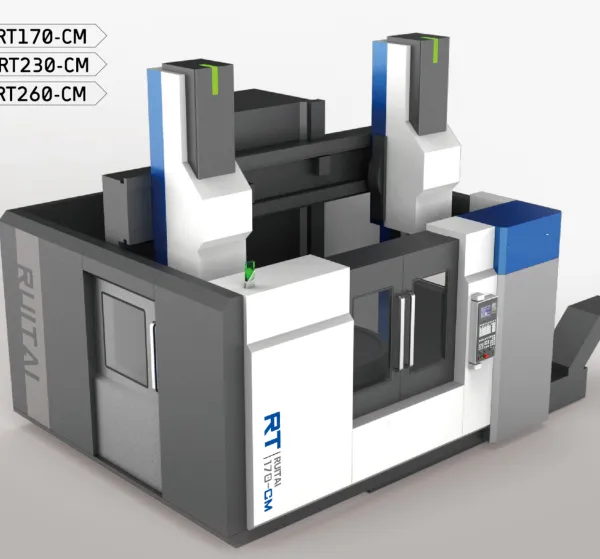
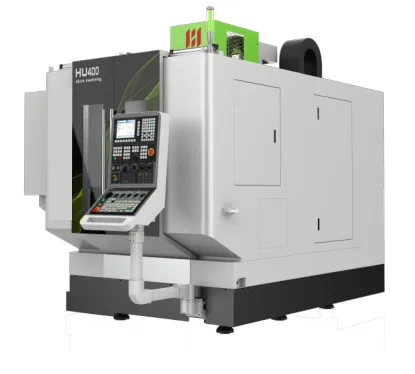
Cnc Vertical Five-Axis Milling Machining Center Made in ChinaUS$ 48000 - 100000MOQ: 1 Set
-
Cnc Edm Drilling Machine Automatic Wire Feed Made in China 0.15-6.0mmUS$ 5500 - 1500000MOQ: 1 Unit
-
Sevro Moto Wire Cut Machine Cnc Wedm With Larger Taper Made in ChinaUS$ 5500 - 1500000MOQ: 1 Unit
-
Cnc Milling Machine Made in ChinaUS$ 28000 - 100000MOQ: 1 Set
-
VMC(vertical Machining Centre) CNC Milling MachineUS$ 28000 - 100000MOQ: 1 Set
-
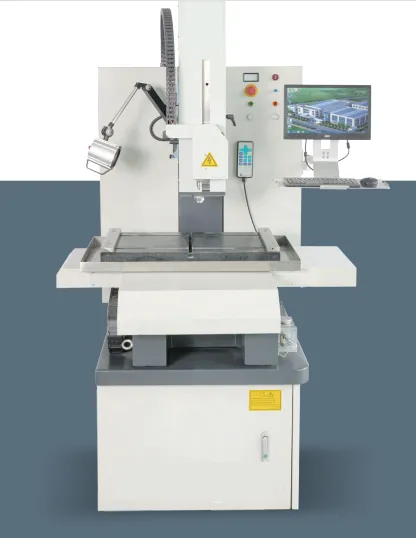
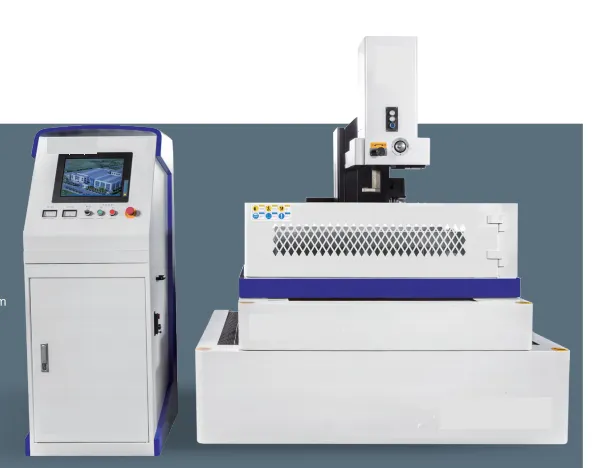
Semi-Automatic Hole Drilling EDM Machine With 0.2-6 mm Electrode, 7 MPa Cooling, 3 kW MotorUS$ 3500 - 500000MOQ: 5 Sets
-
High-Speed Hole Drilling EDM Machine With 12,000 Rpm Electrode Rotation, 1-10 mm Range, IP54US$ 3500 - 500000MOQ: 5 Sets
-
Automatic Hole Drilling EDM Machine, 30 A Pulse Power, 600 mm X-Axis Travel, PLC ControlUS$ 3500 - 500000MOQ: 5 Sets
-
Hole Drilling EDM Machine for Aerospace Turbine Blades, 0.3-2 mm Holes, 5-Axis ControlUS$ 3500 - 500000MOQ: 5 Sets
-
Hole Drilling EDM Machine With 1-Year Warranty, On-Site Technical Training, Standard CompliantUS$ 3500 - 500000MOQ: 5 Sets
-
Hole Drilling EDM Machine, 400 x 300 mm Worktable, 0.01 mm Positioning Accuracy, 220VUS$ 3500 - 500000MOQ: 5 Sets
-
Hole Drilling EDM Machine With 12-Month Warranty, Online Technical Support, Free Remote DiagnosisUS$ 3500 - 500000MOQ: 5 Sets
-
CNC Hole Drilling EDM Machine With 5-Axis Servo Control, 0.3-3 mm Electrode, 380VUS$ 3500 - 500000MOQ: 5 Sets
-
CNC Hole Drilling EDM Machine With 0.005 mm Resolution, 500 mm Z-Axis Stroke, 24 V ControlUS$ 3500 - 500000MOQ: 5 Sets
-
Hole Drilling EDM Machine for Mold Cooling Channels, 0.5-3 mm Holes, 400 mm DepthUS$ 3500 - 500000MOQ: 5 Sets
-
CNC Engraving Machine With Factory Test Report and Standard Compliant, 220V 2.2kW, 12-Month Warranty and Setup SupportNegotiableMOQ: 1 Unit